Testosterone Boosters: What's Actually in the Tub
What testosterone booster supplements contain, what the research shows for zinc, vitamin D, fenugreek, ashwagandha and boron, and when to see a doctor instead.
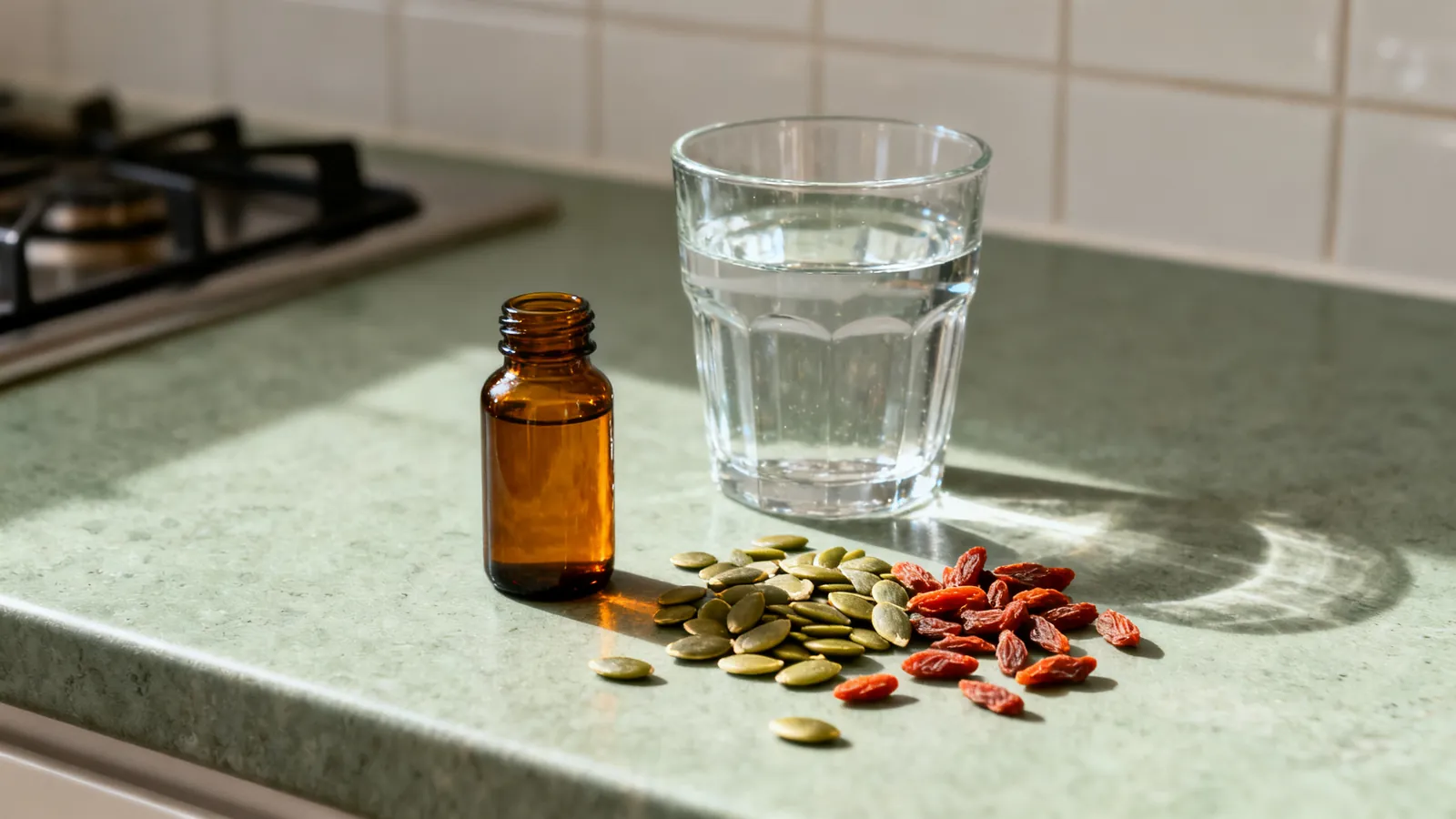
Testosterone booster is a marketing category, not a medical one. The tubs share a familiar cast of ingredients: zinc, vitamin D, magnesium, fenugreek, tongkat ali, ashwagandha, D-aspartic acid, boron. Some of these have real roles in the body. None of them are testosterone in a capsule, and none are a substitute for a diagnosis. For men over 40, the more useful question is not which booster works but whether the symptoms being attributed to low testosterone actually come from low testosterone, and that is answered by a blood test and a doctor, not by a supplement label.
What the research shows, ingredient by ingredient
Evidence for this category is uneven. A few ingredients have small trials behind them, mostly in specific groups such as older men, men with low intake of a nutrient, or men under heavy physical stress. Others rest on mechanistic reasoning and very little human data. Reviews of the research generally find that effects are small, inconsistent between studies, and clearest when someone starts out deficient in something.
Zinc. Zinc is involved in testosterone production, and severe zinc deficiency is associated with low testosterone. Trials in men with adequate zinc intake have generally not shown a meaningful rise. The plausible effect is correction of a shortfall, not a boost above normal.
Vitamin D. Vitamin D receptors are present in the cells that produce testosterone. Studies in men with low vitamin D levels have sometimes shown modest changes after supplementation; studies in men with normal levels have mostly not. The evidence is mixed and the effect, where it appears, is small.
Magnesium. Magnesium is involved in a large number of enzyme reactions, and low magnesium status has been linked with lower testosterone in observational work. Small trials in active men and older men have produced inconsistent results. As with zinc, the realistic scenario is correcting low intake.
Fenugreek. Fenugreek seed extracts have been studied in small trials, often in resistance-training men or older men, with some reports of modest changes in testosterone or in measures such as strength and libido. Reviews describe the evidence as limited and the studies as small and short. It is not a treatment for low testosterone.
Tongkat ali. Also called Eurycoma longifolia, this root has been studied in small trials, including in men with low testosterone and in men under stress. Some trials report changes in testosterone or in questionnaires about mood and libido. The studies are few, often industry-linked, and short. Evidence is limited.
Ashwagandha. Withania somnifera has been studied in small trials, several in men under physical or psychological stress. Some report lower cortisol and modest changes in testosterone. Reviews describe the evidence as early and the trials as small. It is not established as a testosterone treatment.
D-aspartic acid. Early small studies suggested an effect on testosterone. Larger and better-controlled trials in resistance-trained men have generally not confirmed it, and some found no change. This is one of the clearer examples of an ingredient whose early promise did not hold up.
Boron. Small short studies have reported changes in free testosterone and in inflammatory markers. The evidence base is thin and the studies short. It is not enough to support a claim.
Forms, amounts and timing on a label
Amounts below are the ranges commonly used in research or seen on standard labels. They are not targets to exceed, and the label on any product should be followed as written.
- Zinc: commonly 10-30 mg a day, often as zinc citrate, gluconate or picolinate. Long-term high-dose zinc can interfere with copper absorption.
- Vitamin D: commonly 1000-2000 IU a day as D3 (cholecalciferol). Higher amounts are sometimes used under medical supervision after a blood test.
- Magnesium: commonly 200-400 mg a day, often as magnesium citrate, glycinate or oxide. Oxide is poorly absorbed and more likely to loosen the stool.
- Fenugreek: trials have commonly used around 500-600 mg of a standardized seed extract a day, sometimes split into two doses.
- Tongkat ali: trials have commonly used 100-300 mg a day of a standardized root extract.
- Ashwagandha: trials have commonly used 300-600 mg a day of a standardized root extract, often as KSM-type preparations, though brands are not the point.
- D-aspartic acid: trials have commonly used 2-3 g a day. Given the weak results, there is little reason to seek it out.
- Boron: studies have commonly used 3-10 mg a day.
Timing matters less than consistency for most of these. Fat-soluble vitamin D is better absorbed with a meal containing fat. Magnesium is often taken in the evening, partly because of its effect on stool and partly by convention rather than strong evidence. Fenugreek, tongkat ali and ashwagandha are usually taken with food to reduce stomach upset. None of these need to be cycled in any evidence-based way, despite what labels suggest.
What a supplement cannot do, and what a blood test can
No supplement in this category treats an enlarged prostate, and none treats low testosterone. Those are medical conditions with defined diagnostic criteria. An enlarged prostate, or benign prostatic hyperplasia, is assessed by symptoms, examination and sometimes blood tests including prostate-specific antigen. Low testosterone is diagnosed by morning blood tests, usually taken on more than one occasion, alongside symptoms. A product sold as a testosterone booster does not diagnose anything, does not replace those tests, and is not a treatment for either condition.
Symptoms that warrant a doctor rather than a supplement include persistent fatigue, loss of morning erections, reduced sexual desire, difficulty urinating, waking to urinate repeatedly, a weak urinary stream, breast tenderness or enlargement, hot flushes, and loss of muscle or bone density. Some of these overlap with ordinary ageing, which is exactly why testing matters. If a prescription medicine has been given for low testosterone or for prostate symptoms, do not stop or change it without the prescriber, and do not replace it with a supplement.
Side effects, interactions and who should avoid these
- Zinc: nausea and stomach pain at higher doses. Long-term use above the recommended intake can cause copper deficiency. Avoid combining multiple zinc-containing products.
- Vitamin D: generally well tolerated at usual amounts. Very high doses can cause high blood calcium, which is a medical problem. Anyone with a history of kidney stones or high calcium should ask a doctor first.
- Magnesium: diarrhea and cramping, especially with oxide or citrate. Avoid or reduce in kidney disease unless a doctor advises otherwise.
- Fenugreek: may lower blood sugar, so it can add to the effect of diabetes medication. It can also cause gastrointestinal upset and has been associated with allergic reactions in people sensitive to chickpea and peanut.
- Tongkat ali: may interact with sedatives and with medicines that affect blood sugar. Long-term safety data are limited.
- Ashwagandha: has been linked in case reports to liver injury, and may affect thyroid hormone levels. Avoid in thyroid disease, in liver disease, and in anyone taking thyroid medication or sedatives without medical advice.
- D-aspartic acid: generally reported as well tolerated in trials, but the evidence for benefit is weak.
- Boron: long-term safety data are limited. Avoid in kidney disease.
Anyone taking prescription medication, anyone with a medical condition, and anyone who is pregnant or breastfeeding should talk to a doctor or pharmacist before starting any of these. Men with prostate cancer or a history of it, and men on hormone therapy, should treat this whole category as something to discuss with their specialist first.
Common mistakes and myths
- Assuming symptoms equal low testosterone. Fatigue, low mood and reduced libido have many causes, including sleep apnoea, depression, thyroid problems, anaemia and medication side effects. A blood test sorts this out.
- Stacking several boosters at once. Combination products make it impossible to know what is doing what, and increase the chance of exceeding a safe intake of zinc or vitamin D.
- Expecting results without correcting the basics. Sleep duration, body fat, alcohol intake, training load and some medications all influence testosterone. No capsule outweighs a chronic sleep debt.
- Believing a proprietary blend. Blends list ingredients without amounts, which makes it impossible to compare with the doses used in research.
- Treating a normal result. If blood tests are normal, a booster has nothing to correct. More is not better.
- Confusing a supplement with prescription testosterone. They are not equivalent, and prescription therapy requires monitoring that a supplement does not.
| Option | What it is | Evidence strength | Who it does not suit |
|---|---|---|---|
| Zinc | Essential mineral | Correction of deficiency; little effect if replete | Anyone already taking zinc or with copper problems |
| Vitamin D | Fat-soluble vitamin | Mixed; clearest in deficiency | Kidney stone history, high calcium, without testing |
| Magnesium | Essential mineral | Limited; low intake matters most | Kidney disease, sensitive gut |
| Fenugreek | Seed extract | Small short trials | Diabetes medication, chickpea or peanut allergy |
| Tongkat ali | Root extract | Small short trials | Sedative or blood-sugar medication users |
| Ashwagandha | Root extract | Early, small trials | Thyroid disease, liver disease, sedative users |
| D-aspartic acid | Amino acid | Weak; early results not confirmed | Anyone expecting a reliable effect |
| Boron | Trace element | Thin, short studies | Kidney disease |
| Blood test and doctor review | Diagnosis | Established | No one; this is the starting point |
Common questions
Do testosterone boosters actually work?
For most men with normal levels, the evidence does not support a meaningful rise. Where small trials show changes, they tend to involve men who were deficient in a nutrient such as zinc or vitamin D, or men under physical stress. Reviews describe the overall evidence as limited and inconsistent.
What are the best testosterone supplements for men?
There is no reliable ranking, because the trials are small and use different extracts and doses. The more useful step is a blood test to see whether anything is actually low. If a deficiency is found, correcting it with a doctor's input makes more sense than choosing a product by label claims.
Can a natural testosterone booster replace prescription testosterone?
No. Prescription testosterone is a monitored medical therapy with defined criteria and follow-up. Supplements are not equivalent, and anyone already prescribed testosterone or any other medication should not stop or change it without speaking to the prescriber.
What symptoms mean I should see a doctor instead?
Persistent fatigue, loss of morning erections, reduced desire, difficulty urinating, a weak stream, breast tenderness or hot flushes all warrant assessment. Low testosterone is diagnosed by morning blood tests, often repeated, alongside symptoms, and an enlarged prostate is assessed separately.
Are testosterone boosters safe to stack together?
Stacking raises the risk of exceeding safe intakes, particularly for zinc and vitamin D, and makes it impossible to tell what is causing any effect or side effect. Ashwagandha has been linked to liver injury in case reports, and fenugreek can add to blood-sugar-lowering medication.
Read next

How to Increase Testosterone Naturally: What the Evidence Shows
Sleep, body fat, strength training, alcohol and nutrient status all affect testosterone. What research shows, how testing works, and supplement limits.

L-Carnitine and Acetyl-L-Carnitine: What They Do
L-carnitine shuttles fatty acids into mitochondria. A look at the forms, what studies used, TMAO and heart questions, and thyroid and blood-thinner cautions.

Muscle Loss After 50: What Slows It and What Doesn't
Sarcopenia explained: how fast muscle declines after 50, why strength training and protein per meal matter most, and what creatine, vitamin D and HMB can do.