Creatine Monohydrate vs HCl, Micronized and Other Forms
Creatine monohydrate is the form most research used. How HCl, micronized and buffered creatine compare, doses studied, timing, water weight and kidney safety.
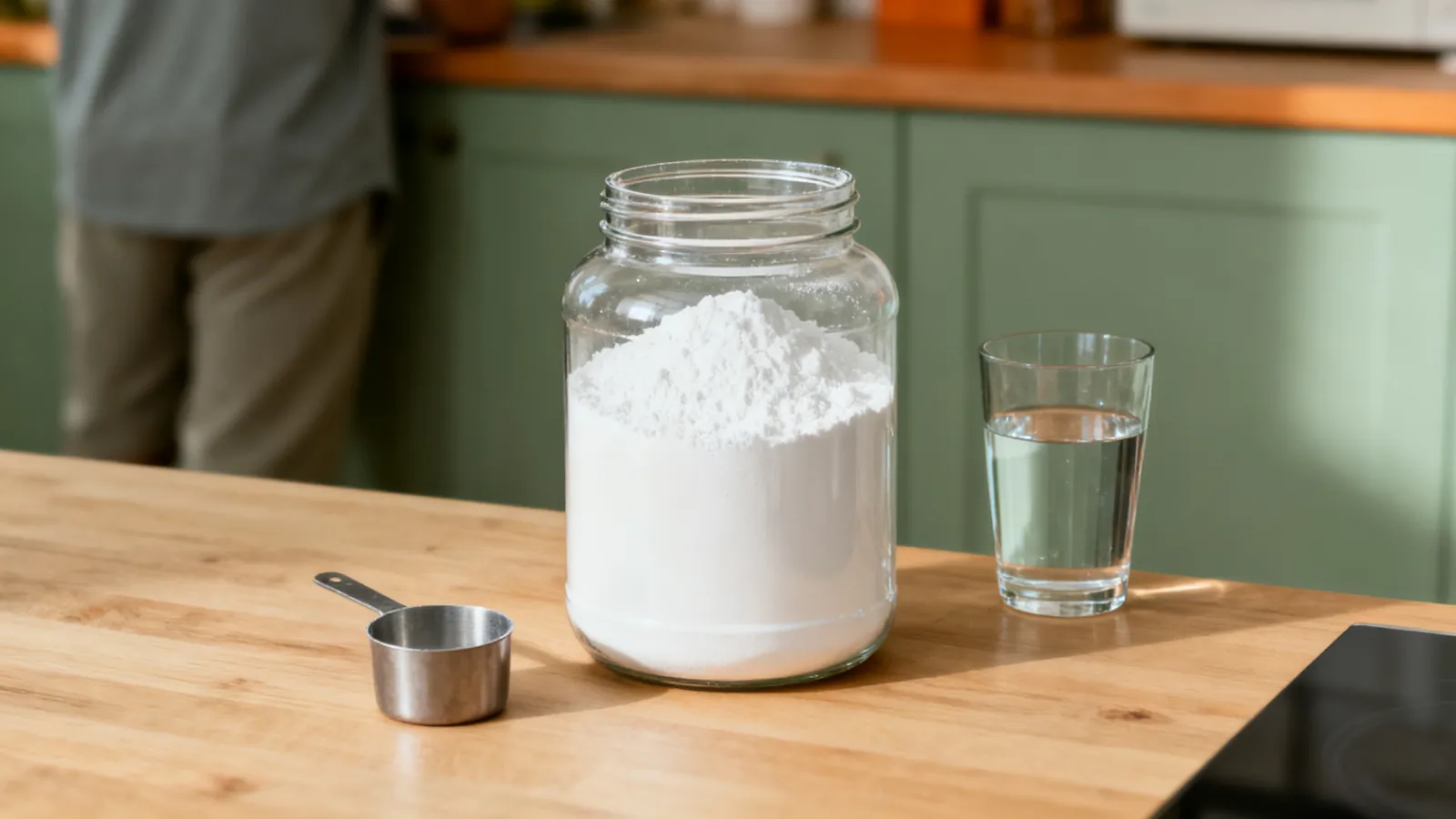
Creatine is one of the most studied sports supplements, and the form that carries almost all of that research is creatine monohydrate. Walk into any supplement aisle and the tubs tell a different story: hydrochloride, micronized, buffered, liquid, capsules. The differences between them are smaller than the labels suggest, and in most cases the cheapest, plainest powder is the one with the evidence behind it.
What creatine does in the muscle
Creatine is a compound the body makes and stores mostly in skeletal muscle, where it helps regenerate a molecule called ATP during short, hard efforts. ATP is the immediate fuel for a few seconds of maximal work, and the phosphocreatine system refills it between efforts. Raising muscle creatine stores through supplementation increases the amount of work that can be done in repeated high-intensity bouts, which is why it shows up in research on sprinting, lifting and team-sport efforts.
It is not a stimulant and it is not a fat burner. It does not work through the nervous system, and it does not do much for long, steady efforts where oxygen is the main fuel. The effect is on short bursts and repeat efforts.
What the research shows, and how strong it is
The evidence for creatine monohydrate is unusually consistent for a supplement. Reviews of the research generally agree that it raises muscle creatine content and improves performance in short, repeated, high-intensity efforts, with the strongest effects in people who start with low muscle creatine, such as vegetarians. Effects on strength and lean mass during resistance training are smaller but still present in many trials.
The evidence is weaker or mixed for several popular claims. Cognitive effects are studied but not settled, with some small trials in sleep-deprived or older adults and inconsistent results elsewhere. Effects on recovery, injury rates and mood are studied less and with smaller samples. Anyone selling certainty on those points is ahead of the data.
Form matters here. The large majority of trials used creatine monohydrate. HCl, buffered and other forms have far less direct evidence, and the studies that exist tend to be small and often funded by the companies selling the product.
How much creatine to take
Two approaches appear in the research.
Loading. Studies have commonly used about 20 g a day, split into four doses of about 5 g, for five to seven days. This saturates muscle stores quickly.
Maintenance. After loading, or as a starting point without loading, studies have commonly used 3-5 g a day. Without a loading phase, stores rise more slowly over roughly three to four weeks.
Larger bodies may need more, and some research uses a rough guide of about 0.03 g per kilogram of body weight per day for maintenance. Splitting the daily amount into smaller doses is often better tolerated than taking it all at once, particularly during loading.
Timing is less important than consistency. Taking it with a meal or a carbohydrate-containing drink may improve uptake slightly, and taking it after training has been studied as possibly better than before, but the difference is small. The main variable is taking it every day, including rest days.
Monohydrate, HCl, micronized and buffered: what actually differs
Creatine monohydrate is creatine bound to a water molecule. It is the reference form, the one in the research, and the cheapest per gram. It is stable in powder form and absorbs well when taken orally.
Creatine hydrochloride (HCl) is creatine bound to hydrochloric acid. It is more soluble in water, which is the basis for claims of better absorption and no bloating. Direct comparisons with monohydrate are scarce, small, and often industry-funded. Solubility in a glass is not the same as absorption in the gut, and monohydrate is already well absorbed.
Micronized creatine is monohydrate that has been processed into finer particles. This changes how it mixes and how it feels in the stomach, not what it does in the muscle. Some people who find regular monohydrate gritty or mildly irritating to the stomach do better with micronized. The dose and the evidence are the same.
Buffered creatine, sometimes sold under the name Kre-Alkalyn, is monohydrate with a higher pH, marketed on the idea that it avoids conversion to creatinine. Studies comparing it with monohydrate have generally found no advantage in strength or muscle creatine content, and some have found it no better than placebo at the doses used.
Capsules are convenient and pre-measured, but a 5 g dose often means several large capsules, and capsule products cost more per gram. Powder is easier to dose and to split.
| Form | What it is | Evidence | Mixing and stomach | Who it does not suit |
|---|---|---|---|---|
| Creatine monohydrate | Creatine bound to water | The form used in most research | Mixes adequately; some report grit or mild stomach upset at high doses | Anyone advised against creatine by a clinician |
| Micronized monohydrate | Finer-particle monohydrate | Same evidence as monohydrate | Mixes more easily; often better tolerated | Same as monohydrate |
| Creatine HCl | Creatine bound to hydrochloric acid | Small, limited comparisons; no clear advantage shown | Very soluble | Anyone wanting the form with the most research behind it |
| Buffered creatine | Higher-pH monohydrate | Trials have not shown an advantage over monohydrate | Similar to monohydrate | Anyone paying more expecting a stronger effect |
| Capsules | Monohydrate or another form in capsule | Depends on the form inside | Convenient; large capsule count for a full dose | Anyone needing 20 g a day during loading |
Water weight, bloating and what the scale does
Creatine draws water into muscle cells, and a rise of roughly 1-2 kg on the scale in the first weeks is common and expected. That water is intracellular, meaning inside the muscle, not under the skin in the way that puffiness from a high-salt meal is. It usually settles after the loading period.
This is not fat gain, and it is not dehydration. Total body water tends to rise, not fall. People who compete in weight-class sports sometimes skip loading to avoid the rapid change, and that is a reasonable choice.
Stomach discomfort, loose stools and nausea are the most common complaints, usually from taking large single doses. Splitting the dose, taking it with food, or switching to micronized monohydrate often resolves it.
The kidney question, answered honestly
Creatine is broken down into creatinine, and creatinine is what blood tests use to estimate kidney function. Supplementing can raise blood creatinine without any change in kidney health, which can make a routine test look worse than it is. Tell the clinician ordering the test that you take creatine.
In healthy adults, reviews of long-term use, including studies running several years, have not found evidence of kidney damage at commonly used doses. The picture is different for people who already have kidney disease, who should not use creatine without a doctor’s guidance. The same applies to anyone with a condition affecting kidney function, and to people taking medicines that can stress the kidneys.
Who should ask a doctor first
Talk to a doctor or pharmacist before starting creatine if you take any medication, are pregnant or breastfeeding, or have a medical condition. Specific groups deserve a conversation first:
- People with kidney disease or a single kidney.
- People with liver disease.
- People taking nephrotoxic drugs, including certain pain relievers used long term, some antibiotics and some blood pressure medicines.
- People with diabetes or high blood pressure, particularly if on medication; creatine does not replace or change prescribed treatment, and nothing should be stopped or altered without the prescriber.
- People taking diuretics or lithium, where fluid and electrolyte balance needs watching.
- Adolescents, who should use it only with a clinician’s input.
Caffeine is often paired with creatine, and the combination is generally well tolerated, though very high caffeine intakes can blunt some of the performance effect in some studies. That is a reason to keep caffeine sensible, not to avoid creatine.
Common mistakes and what creatine cannot do
- Expecting a stimulant effect. Creatine does not give a pre-workout buzz. It works by filling muscle stores over days.
- Skipping rest days. Stores fall when intake stops. Daily use, training or not, is the point.
- Paying for a premium form and expecting more. HCl, buffered and liquid forms have not been shown to outperform monohydrate in the trials available.
- Taking one huge dose. A single 20 g scoop is more likely to cause stomach upset than four 5 g doses.
- Believing it is a fat burner or a health cure. It is a performance supplement for short, hard efforts. It does not treat or prevent any disease.
- Stopping before it has had time. Without loading, expect three to four weeks before stores are fully raised.
- Ignoring the label. Look for creatine monohydrate as the ingredient, a stated amount per serving, and third-party testing where available. Unlabelled blends and proprietary mixes make dosing guesswork.
Common questions
Is creatine HCl better than creatine monohydrate?
There is no clear evidence for that. HCl is more soluble in water, but monohydrate is already well absorbed, and the small comparisons available have not shown HCl outperforming it for strength or muscle creatine. Monohydrate remains the form with the research behind it.
What does micronized creatine change?
Micronized creatine is monohydrate ground into finer particles. It dissolves and mixes more easily and may cause less stomach discomfort for some people, but the dose and the effect on muscle are the same as regular monohydrate.
Do I need to load creatine?
Loading is optional. Studies have commonly used about 20 g a day split into four doses for five to seven days to raise stores quickly. Taking 3-5 g a day without loading also works, but takes roughly three to four weeks to reach the same level.
Does creatine damage your kidneys?
In healthy adults, reviews of long-term use have not found evidence of kidney damage at commonly used doses. Creatine raises blood creatinine, which can make kidney function tests look worse than they are, so tell your clinician you take it. People with existing kidney disease should not use it without medical guidance.
Will creatine make me hold water or look bloated?
A rise of roughly 1-2 kg on the scale in the first weeks is common. The water is drawn into muscle cells rather than under the skin, and it usually settles after loading. It is not fat gain.
Read next

Creatine and HMB: What the Combination Does
How creatine and HMB work together, what research suggests for beginners and older adults, typical amounts studied, and who should avoid the combination.

Creatine for Women: Dose, Water Weight and Myths
Creatine for women: the amounts studied, how it affects the scale, the hair loss myth, use after 40 and around menopause, and who should ask a doctor first.

Creatine: What It Does, How Much, and When to Take It
Creatine monohydrate explained: what it does in muscle, loading and daily doses studied, timing, water weight, kidney safety, and label reading.